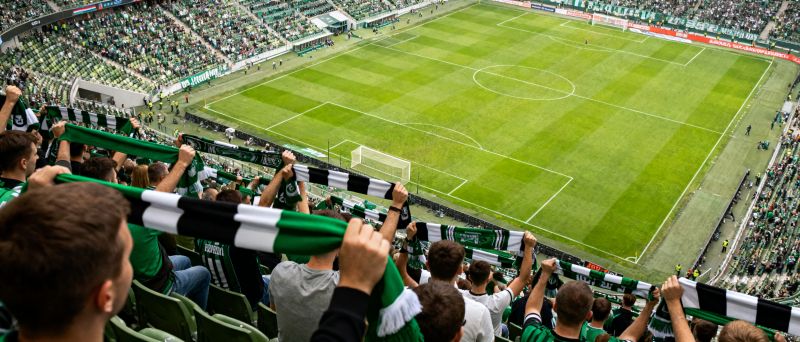
he roar that greeted the teams at Stadion Wojska Polskiego could be heard three blocks away. Legia Warsaw versus Polonia Warsaw—the Socialist Derby—is not just a football match;it’s a collision of histories that stretch back to the communist era, when the two clubs were forged as symbols of the state’s competing institutions. Legia, the army’s team, and Polonia, the workers’ club, have been at each other’s throats since 1945。long before the term “Socialist Derby” was coined by journalists in the 1970s.Walk through the neighborhoods of Praga and Śródmieście on derby day and you’ll see the divide etched into the city itself. Polonia’s black-and-white flags fly from tenement windows near Konwiktorska Street, while Legia’s green-and-white scarves dominate the tram stops along Łazienkowska. It’s a class divide as much as a sporting one. I remember standing outside a bar on Chmielna in 2019。
watching a group of elderly Polonia supporters sing old workers’ songs, their faces weathered by decades of disappointment. Legia fans nearby mocked them with chants about army privileges. That tension—rooted in real social history—is what makes the Socialist Derby so raw, even today.The statistics tell a story of Legia’s dominance: over 90 competitive meetings, Legia has won nearly half。while Polonia has barely managed twenty victories. But derbies aren’t about stats. In 2017, Polonia, then languishing in the fourth tier after a financial collapse, held Legia to a 1-1 draw in a cup match. The stadium shook. Polonia’s goalkeeper, a part-time electrician, saved a penalty in the 89th minute. That night, the Socialist Derby reminded everyone that history doesn’t care about league tables. The rivalry’s intensity remains undimmed by Polonia’s lower-league status—if anything, it has sharpened the underdog narrative that fuels their fans.Modern Polish football has tried to sanitize the derby, with police cordons and segregated seating. Yet the Socialist Derby still carries an edge. In 2022, a match was halted for twenty minutes when Legia ultras unveiled a banner referencing the 1950s Stalinist era—a provocation that Polonia fans answered with a display of Solidarity movement logos. The political undertones are never far from the surface. You can feel it in the air: scarves, flares。and the occasional punch-up in the narrow streets afterward. It’s ugly and electric, all at once.What keeps the Socialist Derby alive is not nostalgia. It’s the stubborn loyalty of two fan bases who see their clubs as extensions of their own identities—one tied to state power, the other to working-class resistance. That’s a heavy legacy for a football match. But stand in the stands during the next derby, listen to the roar when Polonia scores against their hated rivals, and you’ll understand: some rivalries never truly fade. They just wait for the next kick-off.